



Case Study
How High-Fidelity Modelling Improves Safety

High-fidelity modelling allows engineers to predict real-world behaviour with exceptional accuracy. By capturing fine details and complex physics, these models help prevent failures, improve safety and support robust certification processes.
Safety is one of the most important outcomes of engineering work. Whether developing vehicles, components or large systems, teams must ensure that designs behave reliably under all expected conditions. High-fidelity modelling has become an essential tool in achieving this, providing precise predictions that help avoid failures long before physical testing begins.
Capturing Real-World Behaviour in Detail
High-fidelity models incorporate advanced physics, refined material properties and detailed geometries. This allows them to predict behaviour at a far more granular level than traditional models.
Examples include:
- Structural stress at micro levels
- Fine-grain thermal behaviour
- Non-linear material deformation
- Complex fluid dynamics
- Multi-physics interactions
This level of detail makes simulation much closer to reality.

Identifying Safety Issues Early
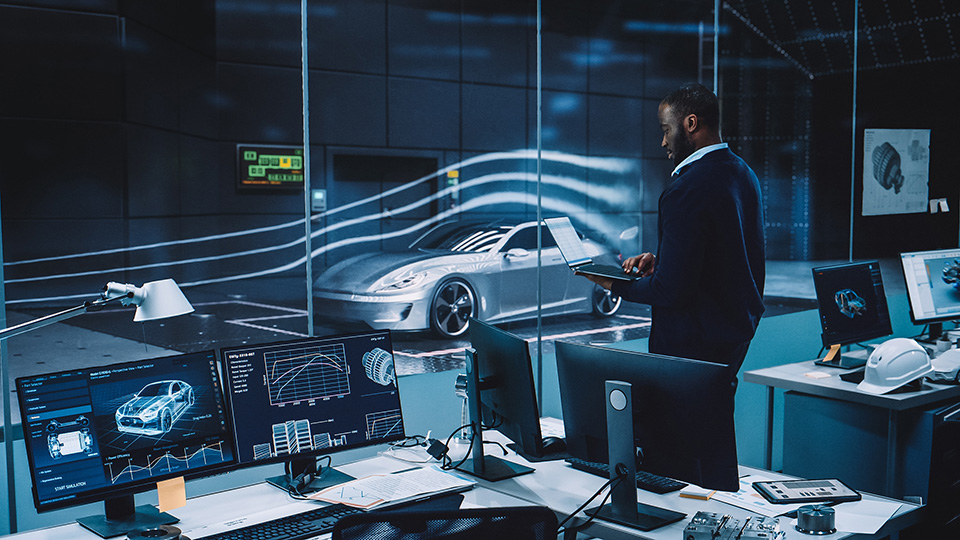
Many safety-critical failures emerge only under specific conditions. High-fidelity modelling allows teams to recreate these scenarios digitally, exposing risks that might not appear in early prototypes.
This is crucial for:
- Crash and impact analysis
- High-temperature events
- Long-term fatigue
- Vibration and oscillation
- Electrical overload
Early detection prevents issues from becoming costly or dangerous in later stages.
“The sooner you find a safety issue, the safer — and cheaper — the whole programme becomes.”
Strengthening Compliance and Certification
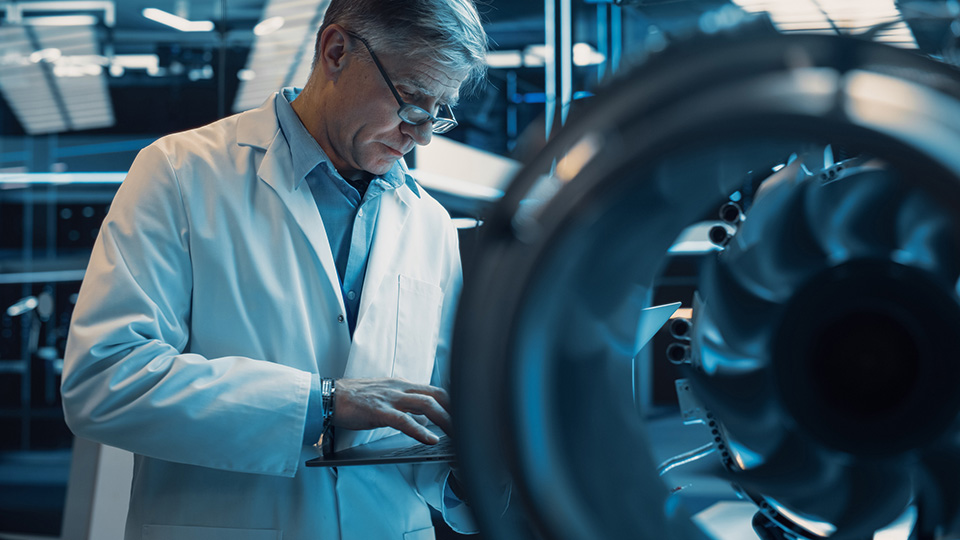
Industries such as aerospace, automotive and energy require extensive documentation to demonstrate safety and compliance. High-fidelity simulations provide traceable, repeatable evidence that supports certification processes.
This includes:
- Load case validation
- Stress and strain mapping
- Fault-tree analysis
- Regulatory reporting
- Subsystem verification
Simulation results become part of the safety case, reducing time and cost during certification.
Reducing Physical Testing Requirements
While physical testing remains essential, high-fidelity modelling reduces the number of destructive or expensive tests required. By validating the model early, teams can use physical testing to confirm predictions rather than discover problems.
This helps deliver safer products faster.
Improving Confidence Across Teams
Accurate modelling builds trust across engineering, leadership and regulatory stakeholders. Decisions are based on evidence, not assumptions, creating confidence at every level of the programme.
High-fidelity modelling is not just about accuracy — it’s about assurance.
INSIGHTS/ CASE STUDIES HEADING



SUBSCRIBE TO OUR NEWSLETTER
Join our newsletter to stay up to date on features and releases.

