


News
The Future of Automotive R&D

Automotive R&D is undergoing rapid transformation driven by electrification, autonomy, software integration and shifting regulations. The future belongs to engineering teams who adopt connected workflows, virtual validation and data-driven decision-making.
Software-First Engineering Becomes the Standard
Traditionally, automotive engineering focused on mechanical systems supported by electronic components. Today, the opposite is true. Modern vehicles are defined by software — from battery management and thermal control to driver-assist technologies and remote diagnostics.
This shift requires tighter collaboration between software, electronics, mechanical engineering and simulation teams. It is no longer enough to optimise individual systems; performance must be considered holistically, with software as the central nervous system of the vehicle.

Virtual Validation Reduces Prototypes and Shortens Timelines
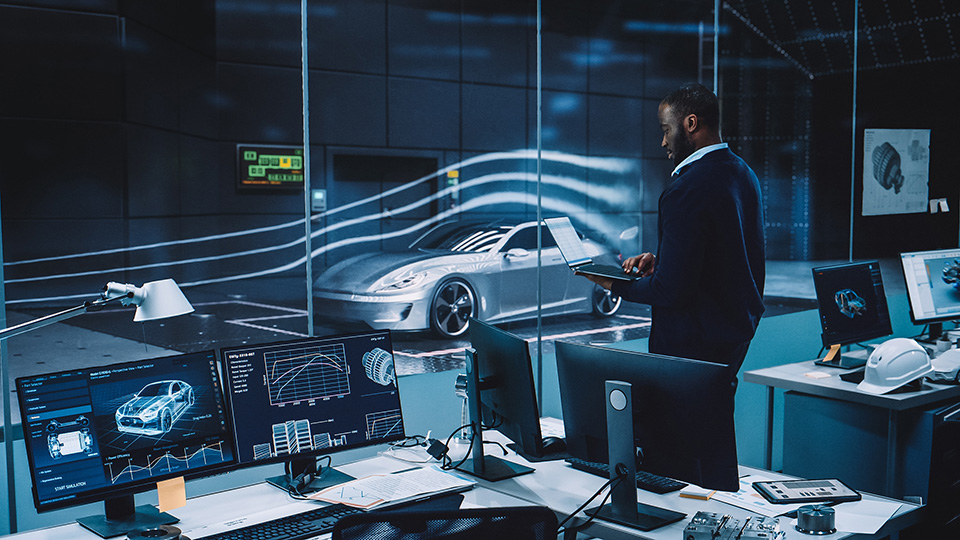
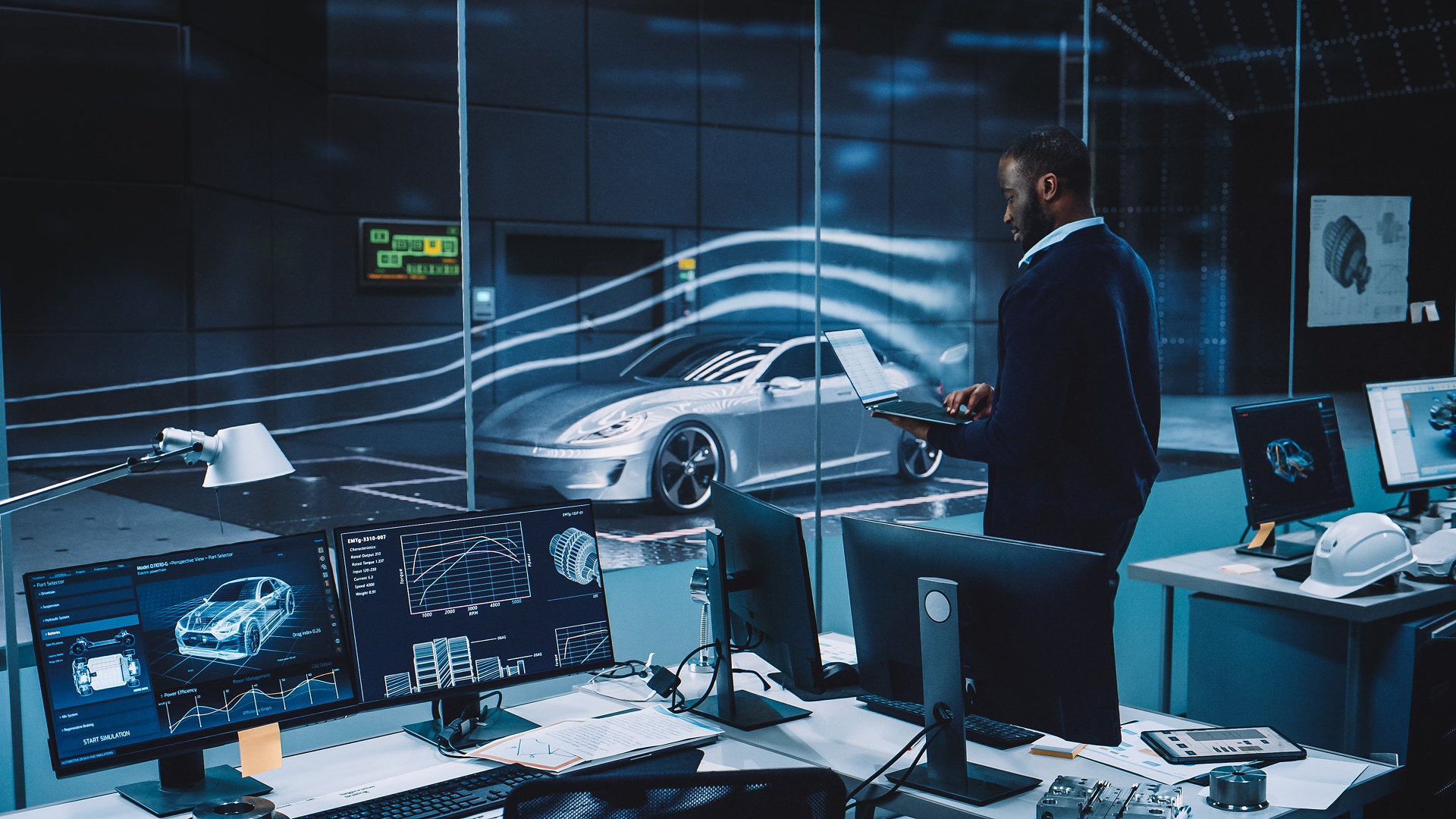
The increasing complexity of modern vehicles makes traditional physical testing alone unsustainable. Virtual validation allows engineers to test thousands of scenarios digitally before building a single prototype.
These simulations cover:
- Crash analysis
- Battery thermal behaviour
- Aerodynamics
- Dynamic vehicle handling
- Electrical system performance
- Autonomous driving edge cases
The result is a faster, more controlled development process with fewer physical iterations and significantly lower cost.
“The future of vehicle development is virtual first, physical second.”
Electrification Introduces New Engineering Challenges
EVs introduce engineering considerations that combustion vehicles never faced. Battery temperature management, degradation, weight distribution, energy efficiency and charging behaviour all play critical roles in performance.
Advanced simulation is essential to solve these challenges. Multi-physics modelling allows engineers to test scenarios that would be impossible or unsafe to recreate physically, enabling optimisation long before a prototype leaves the workshop.
AI and Data Will Transform R&D Further
Modern vehicles generate vast amounts of data. When combined with simulation outputs, AI can identify trends, detect weaknesses and even propose design improvements automatically.
Future R&D teams will rely on:
- Predictive modelling
- Real-time digital twins
- Automated optimisation
- Simulation-driven design exploration
- Data-assisted decision-making
This marks the transition from traditional engineering to intelligent, adaptive engineering.
Collaboration Becomes a Critical Advantage
With so many disciplines involved, automotive R&D must become more collaborative. Integrated toolchains, shared models and unified data environments ensure every team works from the same truth.
The organisations that adopt connected workflows will deliver faster, innovate more effectively and maintain a competitive edge in an industry undergoing rapid change.
INSIGHTS/ CASE STUDIES HEADING


SUBSCRIBE TO OUR NEWSLETTER
Join our newsletter to stay up to date on features and releases.

