


Insight
How Simulation Accelerates Engineering

Simulation has become one of the most powerful tools in modern engineering. As products become more complex and timelines tighten, virtual validation enables teams to explore ideas faster, reduce cost and remove risk long before physical prototypes exist.
How Simulation Accelerates Real-World Engineering
Engineering has always been a balance between vision and validation. As products become more complex and development cycles tighten, traditional “build and test” approaches can no longer keep pace. Simulation has become essential — not just as a supportive tool, but as a core driver of innovation, cost efficiency and programme success. Today, the most competitive engineering teams consider simulation the backbone of their entire development process.
A Faster Path From Concept to Reality
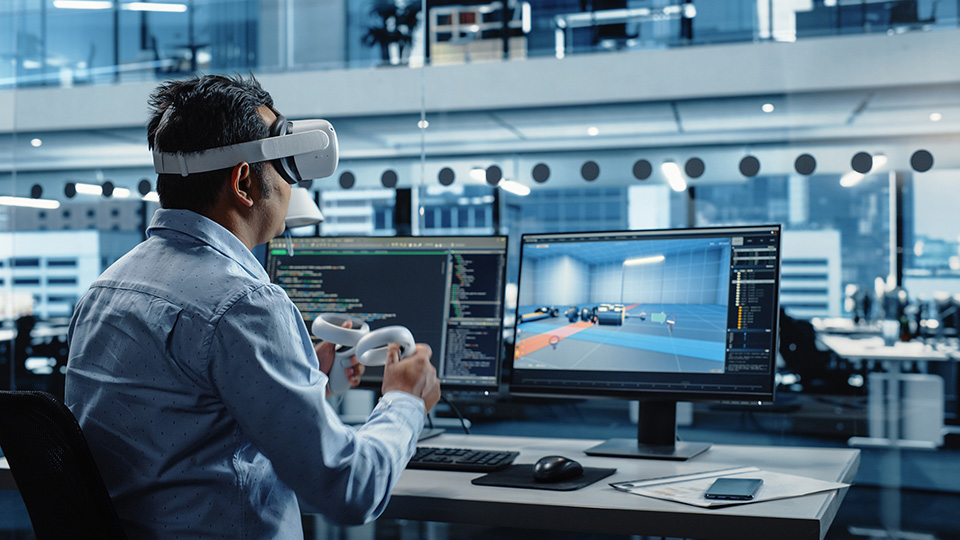
One of the biggest advantages simulation brings is speed. Instead of waiting for physical prototypes, engineers can test ideas the moment they exist in CAD. Thermal behaviour, structural integrity, aerodynamics, battery performance, NVH — hundreds of scenarios can be explored in hours rather than weeks.
This accelerated iteration unlocks something invaluable: the freedom to explore. When physical testing is expensive and time-consuming, teams naturally resist taking risks. Simulation reverses that mindset. Engineers can trial bold concepts early, refine them rapidly, and eliminate weak ideas long before they reach the workshop or test track.
“Simulation doesn’t just save time. It gives teams permission to innovate.”

Reducing Programme Cost and Risk
Physical prototypes are expensive. Track time is expensive. Late-stage changes are very expensive.
Simulation dramatically reduces these costs by enabling teams to identify failure points before they become real problems.
A well-integrated simulation workflow can highlight:
- Structural weaknesses
- Cooling inefficiencies
- Stress concentrations
- Packaging issues
- Aerodynamic instability
- Electrical or thermal overload
Catching issues early prevents cascading rework later in the programme. This doesn’t just keep budgets under control — it keeps delivery timelines on track.
Improving Accuracy and Confidence
Simulation tools have evolved significantly over the last decade. High-fidelity models now capture extremely fine-grain behaviours, meaning predictions are more reliable than ever before.
As models are validated through physical testing, they improve further. The result is a development cycle where simulation and physical testing strengthen each other. By the time a design reaches the real world, teams already understand exactly how it should perform.
This level of accuracy instils confidence — not just within engineering teams, but across the wider organisation. Leadership can make investment decisions with clarity. Stakeholders can see proof-based evidence rather than best-guess estimations.
Enabling Better Decision-Making
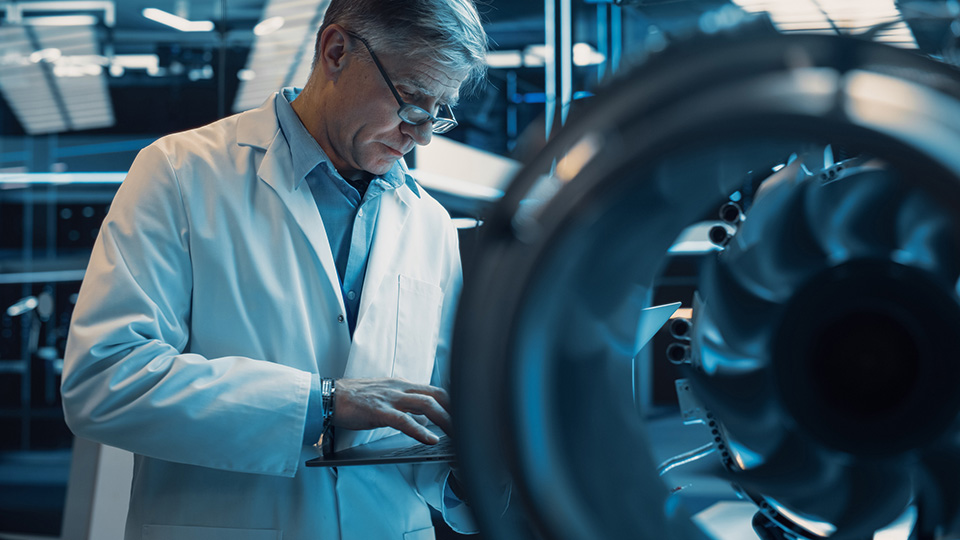
Simulation provides insight, but it also provides alignment. When teams have access to the same models, the same data and the same performance predictions, conversations become clearer. There’s no debate over which prototype was tested, or whether conditions were comparable — everything is controlled, consistent and traceable.
This shared decision-making environment reduces friction between disciplines and encourages cross-functional collaboration. Mechanical, electrical, aerodynamics, software and systems teams can work from the same truth, enabling faster, more informed discussions.
Future-Proofing Engineering Workflows
As industries evolve — particularly automotive, motorsport and advanced manufacturing — the need for rapid validation will only intensify. Growing complexity requires tools that scale with ambition. Simulation is one of the few capabilities that can meet this challenge head-on.
In the future, simulation will become even more embedded within every stage of development, from concept to production to in-service monitoring. Combined with AI-driven optimisation, the potential for intelligent, self-improving engineering pipelines is enormous.
Simulation isn’t just a tool to accelerate engineering today — it’s a foundation for how engineering will be done tomorrow.
INSIGHTS/ CASE STUDIES HEADING


SUBSCRIBE TO OUR NEWSLETTER
Join our newsletter to stay up to date on features and releases.

